Back to Archive | Back to Current Newsletter
Welcome to Esty Educator, a resource created exclusively for skin care schools and instructors. Each newsletter is filled with classroom tools and activities, important industry information, and links to ASCP resources created for schools and instructors.
2024 Issue 2
- Test-Taking is a Skill: Try This Lecture Outline to Help Students Succeed
- ASCP School Forum is All About You!
- Instructor Activity: Become an Awesome Exam Writer
- Classroom Idea: The Power of Sharing
- Free Curriculum Offer for ASCP Member Schools
- Meet the Team

Test-Taking is a Skill: Try This Lecture Outline to Help Students Succeed
Download your "Test-Taking Lecture Outline"
“I’m just not a good test-taker.” How many times have you heard a learner say this to justify why they didn’t perform well on an exam? While these learners might genuinely believe what they’re saying, in reality, they simply haven’t been taught how to strategically take an exam. It is a skill just like learning client assessment, skin structure, sanitation, etc. Therefore, it only makes sense that we teach test-taking as a skill if we want successful students.
It only takes a one-hour lecture to equip learners with test-taking skills that can be practiced repeatedly with each exam you administer throughout your curriculum. To make it simple, here we offer a guide with the necessary points to cover.
Debunk the Myth
First, it’s important for learners to recognize that test-taking is a skill, not a gifted ability that some have, and some don’t. Engage and empower learners by separating myth from truth. For example, you might present the following considerations at the beginning of your class:
Myth—People are naturally math or science people, while others are language and arts people.
Truth—You gravitate to what is interesting to you, and this is what makes you good at it. You are willing to put time and effort into things you care about.
Myth—People are naturally good at taking tests, while others are not.
Truth—Test-taking is a skill, and just like any skill, understanding the components of a skill and practicing are the way to mastery.
Next, lead learners through a brief brainstorming and discussion of other areas of life where myths exist of natural ability versus skill potential. This challenges the learner’s beliefs, piques their interest, and creates a “why” for the learning that is to follow.
Present Skill Components: A Lecture Outline
The core of your lecture, mapped out here, should outline the basic skills of test-taking. This consists of teaching the learners to look at each question through the following lens:
1. Take questions at face value.
Licensing test questions are not designed to trick you, so don’t assume you are being tricked. Take each question as an opportunity to demonstrate knowledge and comprehension or a problem to be solved rather than a game designed to outsmart you. Consider each question as a real-life, necessary piece of information that matters.
2. Read the question completely before looking at the options.
Try to understand the question being asked. What comprehension is being sought? Boil the question down (especially in scenario-based questions) to its core.
3. Read each option completely.
Don’t stop at “A” just because you think it is right. Read everything, even if you think “A” is the right answer.
4. Eliminate answers you know are incorrect.
Narrowing down your options will reduce overwhelm and help you focus on only what is viable.
5. After choosing an answer, make sure it answers the question being posed.
After reading all options, reread the question. Sometimes answers are correct statements, but they don’t answer the question. It is essential to boil down the question to what is being asked and what comprehension is being sought.
6. Use terminology as a guide.
When uncertain, pick out key terms and recall what they mean. This can quickly rule out incorrect responses. If you can’t recall what a key term is, break it down into prefixes and suffixes. For example: antipyretic medication. Anti = against. Pyr = (you might ask, where have I seen this before? Pyromaniac. Pyrotechnics. Pyr must mean . . . ) Fire. Which of the options means “against fire”? Answer—fever reducer.
7. Watch your thoughts.
Test-taking is a mental experience that can be thwarted by negative perceptions. Maintaining confidence and a positive mindset goes a long way. If anxiety creeps in, take a minute to pause, take deep breaths, plant your feet firmly on the floor, embody a posture of conviction and faith in yourself, and move forward with certainty.
Anchor Their Skills
End your lecture with a 10-question multiple-choice quiz you can do as a class or in small groups utilizing the new skill components. Work together to slowly and methodically talk through each and every question.
Using multiple-choice questions as your primary testing method is another useful way to give your students practice using their newly learned test-taking skills. However, not all multiple-choice questions are well-written, but there are best practices to follow that ensure the questions effectively test their knowledge. Check out the Instructor Activity below for ways to improve your question-writing skills!


Calling All Esty Educators, Administrators, and School Owners
ASCP School Forum, April 6–7, is All About You!
Attending the annual ASCP School Forum is about community building, problem solving, and idea making. It’s a time each year where school instructors, owners, and administrators have an opportunity to gather and learn from each other in a fun, collaborative environment.
This year, we're excited to host the ASCP School Forum in our home state and share with you all that Denver, Colorado, has to offer. Our venue and accommodations are at the Limelight Hotel, located in the heart of downtown Denver. Discounted room rates are available until March 1, 2025.
Come Early, Stay Late
The 2025 ASCP School Forum begins Sunday so come in early to check out the city, or add a few days to the back end of your visit.
Downtown will be abuzz with spring fever, and when not in forum sessions, you can immerse yourself in a host of activities: the Denver Jazz Fest (denverjazz.org), Colorado Rockies baseball opening weekend, downtown wine walks and pub crawls, museum and gallery explorations, and so much more. And you’ll get to be right in the heart of it!
Your options for restaurants, nightlife, and the arts will be plentiful, and Denver’s famed Union Station is literally steps away.
Why Attend?
Each year, instructors and school owners rave about their experience at the forum. From veteran instructors to school owners to educators who are brand-new to standing in front of a classroom, the ASCP School Forum has something for everyone. But, don’t take our word for it. Here’s what last year’s attendees have to say.
“Attending the ASCP conference for the first time was beyond amazing,” says Haleigh Trout from Penrose Academy. “The ‘unsession’ format brought a fresh vibe, making it fun and enlightening to explore various topics and chat and collaborate with peers from other schools. Discovering new product lines was eye-opening, and the spacious conference room made learning and networking a breeze. I left feeling energized and eager to bring new ideas to our school. This experience was unforgettable and left me feeling motivated and inspired!”
For Vincy Nichols, associate director of education at the Southwest Institute of Medical Aesthetics in Tempe, Arizona, the forum gave him inspiration to take back to his school: “The ASCP Forum was a great opportunity for instructors to discuss challenges, rapid industry changes, solutions, and ideas. The presentation was well organized with guest speakers giving valuable and informative insight that inspired me to take back with me. A huge thanks to ASCP for the wonderful learning experience and their solid support for instructors, students, and esthetics education.”
Creating Connections
Even though our school liaisons visit and talk with schools all year long, there is something unique about the connections that happen at the ASCP School Forum. Taffie Lewis, ASCP director of membership outreach, says the forum is one of the most important events for the skin care school community. “Every year, we hear from our attendees that the chance to connect with others in skin care education is energizing, insightful, and a meaningful ingredient to their ongoing success,” Lewis says. “Most schools exist in a competitive market where best practices are often guarded and learning from competing schools isn’t the norm. The ASCP School Forum is a national event that opens those sharing and learning opportunities and is designed to be an ‘attendee-led’ event. In other words, topics are planned but how they’re explored is completely up to the schools and where they need to go! This is not your run-of-the-mill conference where others speak all day, and you listen. Your voice is imperative!”
Lewis says there’s no other school meeting like this and it’s a crucial gathering for educators to network, learn, and grow. “Our topics are typically a nice blend between education trends and helpful school leadership sessions to support continued school success. It’s a dynamic event where both leadership and instructors can apply the topics to their own school challenges and goals, while expanding the conversation with others in the same boat.” Lewis says bringing more than one attendee is encouraged and recommended: “We can’t wait to see you in April!”
Special Offers
Registration (and early-bird pricing) for the 2025 ASCP School Forum is open now at ascpskincare.com/ascp-school-forum. The event schedule and more details will be coming soon. ASCP Premier School members receive one free registration to the event through January 31, 2025 (hotel and airfare not included). Contact your school liaison to get your free registration at education@ascpskincare.com or 800-789-0411.

Instructor Activity
Become an Awesome Exam Writer
The best way instructors can support learners' test-taking skills is to ensure they are practicing with well-written questions. A multiple-choice question is made up of a stem (the question), a key (the correct response), and distractors (incorrect responses). Instructors, consider these guidelines to refine your approach to writing each component of a multiple-choice question:
Stem
- Use straightforward language—State the question briefly and avoid awkward phrasing, unknown terms, wordiness, or unnecessary complexity.
- Use a positive form—Only ask the learner which is the correct response rather than which one is not the correct response. In other words, avoid negative phrasing, such as "Which of the following is not…"
- Avoid teaching in the stem—Test only what they already know going into the exam rather than introducing new information within the exam questions.
- Do not use the word you—Responses should be based on fact, not opinion. The word you leaves room for the learner to debate a correct response based on what they think, rather than "what is."
Key and Distractors
- Make sure the key is the only correct response.
- Write each distractor to match the key in length, phrasing, and style. Too often the correct response is obvious because it contains more details than the incorrect responses.
- Avoid wordiness, made-up words, unknown terminology, distractors with miniscule distinctions between answers, and the use of humor.
- Refrain from using "all of the above," "none of the above," or "both A and B."
Instructor Homework
1. Now, using these guidelines, write five multiple-choice questions (or revise previously written questions).
2. Ask a fellow instructor to read the guidelines, analyze your questions, and offer constructive feedback.

Great Classroom Ideas: The Power of Sharing
Improve your students' note-taking skills by having them help each other. Immediately after teaching a complex or crucial portion of your class, stop and ask your students to pair up and share their notes with each other. It will help them fill in the gaps in their own notes and they may teach each other some new note-taking tricks. Knowing they may have to show their notes to someone else will also encourage them to kick it up a notch. Ask someone to share something their partner did particularly well with the group. Encourage them to continue the practice in study groups outside of class.

ASCP Free Curriculum
ASCP School members have a wide variety of benefits for their instructors and students. When you become an ASCP Premier School member, you have access to these exclusive resources you can use in the classroom:
- ASCP Skin Pro app and ASCP Skin Pro curriculum
- ASCP Career Toolkits and ASCP Career Toolkits curriculum
- ASCP Legislative Toolkit and curriculum
- ASCP Risk Reduction curriculum
ASCP Schools can log in and access their free curriculum packages at www.ascpskincare.com/members/instructor-prospect. Not a School member, contact your liaison at education@ascpskincare.com.
Meet Your ASCP Team
Is your school part of the ASCP family?
ASCP School membership includes a variety of resources for students, as well as lesson plans, tools, and presentations to help your faculty and students succeed. Learn more at ascpskincare.com/educators, or email our school liaisons at education@ascpskincare.com with your questions.

Amber Edwards
AmberE@ascpskincare.com
800-789-0411, ext. 1613
Areas Covered: Alaska, Arizona, California, Colorado, Connecticut, Delaware, D.C., Hawaii, Idaho, Maine, Maryland, Massachusetts, Montana, Nebraska, Nevada, New Hampshire, New Jersey, New Mexico, New York, North Dakota, Oregon, Pennsylvania, Rhode Island, South Dakota, Utah, Vermont, Washington, West Virginia, Wyoming
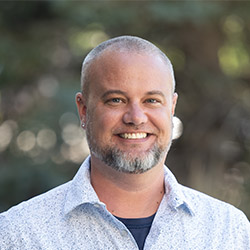
Brian Sinclair
Brian@ascpskincare.com
800-789-0411, ext. 1633
Areas Covered: Alabama, Arkansas, Florida, Georgia, Illinois, Indiana, Iowa, Kansas, Kentucky, Louisiana, Michigan, Minnesota, Mississippi, Missouri, North Carolina, Ohio, Oklahoma, Puerto Rico, South Carolina, Tennessee, Texas, US Virgin Islands, Virginia, Wisconsin