Welcome to Esty Educator, a resource created exclusively for skin care schools and instructors. Each newsletter is filled with classroom tools and activities, important industry information, and links to ASCP resources created for schools and instructors.
Back to Archive | Back to Current Newsletter
Current Issue
- Sharing Best Practices: Tips for Instructors, Administrators, and School Owners
- The Challenging Student: Strategies to Control the Classroom
- San Diego is the Place to Be: ASCP School Forum
- Be the First ASCP Instructor of the Year
- Meet the ASCP Team

Sharing Best Practices: Tips for Instructors, Administrators, and School Owners
By Karrie Osborn, ASCP Sr. Editor, Education
Learning from each other is a hallmark of the annual ASCP School Forum, where each year, instructors, school owners, and administrators gather to discuss their challenges, opportunities, and best practices. We wanted to channel a little of that magic here and share what some of our best and brightest are doing to improve the school experience for their students, instructors, and administrators alike.
MAKE LEARNING MORE IMPACTFUL FOR STUDENTS
"Meet students where they are" is important advice, especially when dealing with a spectrum of adult learners. Here's what these school owners and directors have to say about student impacts.
Read More
Speak the student's language
Maybe the most important thing for today's student is having an instructor who makes an effort to connect. Sharicka Washington, owner of Institute of Skin Science in New Hampshire, tells instructors to push themselves to that end: "Have an understanding of communication styles outside of your own generation and culture. Develop an understanding of neurodiversity, communication, and learning styles other than your own. You need to be able to connect with and support everyone in your program equally, she says.
Patience and understanding
Maintaining patience and understanding with your students is critical. "We were all in their shoes once and chances are it wasn’t easy for anyone," Washington says. "Starting a new career path/life journey/routine/etc. within a whole new, unknown world and with new people can be overwhelming. We can't expect students to always show up as their best, but it is our role as educators to show up as our best consistently, no matter what. Doing this will act as a pillar of motivation as the students move through the ups and downs of their own journey."
HOW INSTRUCTORS CAN MAKE THEIR OWN LIVES EASIER
As an instructor, you have a busy schedule and demands on your time from all directions. Planning is an important tool at your fingertips.
Plan ahead, but remain flexible
Steffi Toth, esthetics manager at Penrose Academy in Arizona, says her best advice for instructors is to "stay organized, plan ahead, and always have a backup plan." But backup plans aren't just for when things go completely south during the day; they're also for when the classroom energy needs a boost, or when students aren't engaging with the topic. "Students love seeing educators refresh a demo, it keeps them inspired and engaged. If the clinic slows down, create a quick daily challenge or mini competition. I’m a big believer in keeping momentum, playing a game, or doing product knowledge to fill downtime and keep the energy up," Toth says.
Anticipate the questions
As part of lesson planning, Washington says to consider frequently asked or expected questions, even myths about a topic that could come up with students and include the answers in your presentation. “Our textbooks often have superficial information that requires more in-depth explanations for a well-rounded understanding of a concept, and presentations have an opportunity to flow better if we can supplement additional information when needed,” she says.
Lean on your team
Don't go it alone, says Toth. Part of being a great educator is working in tandem with your colleagues. "Build strong relationships with your team and don't hesitate to lean on veteran educators for ideas or support."
Empower students
Teaching students critical thinking skills is empowering for you and them. Don't let learners rely solely on the instructor for their answers. Showing students how to do their own research and educate themselves is an important part of the learning journey, Washington says. "Early on, we give the expectation to the students that we are not holding their hand throughout their whole career, so they will get used to finding the answer for themselves. We introduce tools like the ASCP Skin Pro app, and other resources they will have access to after graduation to compare what we are learning in the textbook to how to apply that information in everyday working world scenarios." (Want to know more about ASCP Skin Pro? Go to ascpskincare.com/skinpro.)
CREATING A SUCCESSFUL SCHOOL ENVIRONMENT
Sometimes it's the practical things and sometimes it's the big-picture things that make your school great. Here are bits of advice on both.
Be a critical observer
Be willing to walk in the shoes of others, says Washington, who has owned her school for over 10 years. "For new school owners—schedule your time in a way that allows you to personally experience the daily life of a student, instructor, or other staff members to truly understand their daily ups and downs, while allowing yourself to step back and improve the environment, systems, etc., as needed."
Set strong, kind standards
A good leader needs to find the balance between rules and structure and being adaptable. "Lead with empathy, consistency, and kindness," says Toth. "Students mirror your energy, so model professionalism, patience, and passion every day. Protect your culture by creating structure while offering encouragement and flexibility. Train your students as future professionals, not just current learners, and never stop growing yourself—the beauty industry evolves fast, and so should we."
READ ALL THE GREAT IDEAS FROM THESE INSTRUCTORS:
- "Tips for Instructors, Administrators, and School Owners with Brandon Smith," director, Laurel Highlands Therapeutic Academy in Ebensburg, Pennsylvania
- "Tips for Instructors, Administrators, and School Owners with Steffi Toth," esthetics manager, Penrose Academy in Scottsdale, Arizona
- "Tips for Instructors, Administrators, and School Owners with Sharicka Washington," school owner/president, Institute of Skin Science in Stratham, New Hampshire
.png)

The Challenging Student: Strategies to Control the Classroom
By Jimmy Gialelis, BCTMB
Challenging students come with every classroom, and at every age. Here are some tried and true ways to handle the students who bring "spice" into our classrooms.
CHALLENGE: A STUDENT DOESN'T FOLLOW CLASSROOM POLICIES AND PROCEDURES.
Students who blatantly disobey instructors typically have one of two attitudes: Either they feel policies do not apply to them or they do not agree or understand the premise of the policy. To reiterate the need to receive and provide during hands-on practice.
Tips
- For "these rules don’t apply to me" students, be ready to stand firm in the need for them to follow policies. Do not take it personally if the student becomes verbally combative. You may be the first adult to make them commit to following rules.
- For "I don't agree with your rules" students, have rationale for why a policy exists and how it protects the classroom environment. The majority of students will follow the policy once they understand the "why" of it. Speaking to safety in the classroom usually works to express the reasoning.
Read More
CHALLENGE: A STUDENT SITS AWAY FROM THEIR CLASSMATES.
Classroom community may become an integral part of the entry-level learning experience. Having students refuse to participate within the greater class community can have negative effects on class morale and continuity.
Tips
- A student who prefers to sit away from the group may simply do so to help pay attention during class lecture time. That is understandable. Does this same student also attempt to elude the group during demonstration and hands-on time periods? If so, you may need to address it.
- I have asked students to sit closer for the sake of seeing the class demonstration so they can perform their services safely. I say the word safely, not properly, to engage an urgency that safely performing techniques upon classmates is part of a safe classroom environment.
CHALLENGE: A STUDENT WANTS THE CLASS TO MOVE AT A FASTER ACADEMIC PACE.
It is nice to have exceptional students who want to excel, but it becomes challenging when they become frustrated and bring negativity into the classroom toward their classmates and/or instructors.
Tips
- I share with my "faster-pace" students that we can have private discussions or study sessions to provide greater depth of knowledge and insight into their desired area of interest.
- I also explain that sticking to the established curricula is a part of my job to ensure every student receives the same baseline knowledge.
To help ease challenging situations with students, review key classroom policies, procedures, and ways to resolve disputes early in the student timeline. Once students see that classroom policies and procedures ensure a healthy and safe learning environment, the vast majority are willing to follow them.


San Diego Is the Place to Be: ASCP School Forum
WHEN: April 12–13, 2026
WHERE: San Diego, California; Rancho Bernardo Inn, ranchobernardoinn.com
We hear from you again and again about the value of learning, collaborating, and connecting with your peers each year at the ASCP School Forum. And we’re always excited to support that mission. In 2026, we hope our lineup helps you handle some of today’s real-world education problems and gets you excited about the future. Following is a taste of our upcoming event:
FEATURED PRESENTATIONS:
-
"The Toxic Leadership Disease: Diagnosing, Treating, and Transforming Leadership in Education" with Ketia Bradley, Ed.D., founder and CEO, Ivy Beauty Institute
• "Wellness Technology Trends and Schools: AI, Robots, and Beyond" with Sherrie Tennessee, Ph.D., CHE, Director of Education, SpaSOS
Early-Bird Deadline:
The ASCP Premier Schools discount and early-bird registration ends January 31.
Register today at ascpskincare.com/ascp-school-forum.
.png)
Be the First ASCP Instructor of the Year
You educate. You inspire. You shape the future of esthetics—and now it’s your time to be recognized. The ASCP Instructor of the Year award celebrates an educator who inspires, leads, and transforms the art and science of esthetics for every student they teach.
Tell your story—or nominate a colleague who shines in the classroom. Be the first-ever recipient and take center stage at the ASCP School Forum, setting the standard for excellence in esthetics education.
Meet Your Team
Is your school part of the ASCP family?
ASCP School membership includes a variety of resources for students, and lesson plans, tools, and presentations to help your faculty and students succeed. Learn more at ascpskincare.com/educators or email our school liaisons at education@ascpskincare.com with your questions and to request a 15-minute virtual school resource tour today!

Amber Edwards
ASCP School Liaison
AmberE@ascpskincare.com
800-789-0411, ext. 1613
"Career Toolkits are my favorite ASCP student and school membership benefit. They make it easy for students to decide if employment or business ownership is the right path for them; the interactive calculators (for compensation, startup costs, and revenue potential) help make that path so much clearer."
Areas Covered: Alaska, Arizona, California, Colorado, Connecticut, Delaware, D.C., Hawaii, Idaho, Kentucky, Maine, Maryland, Massachusetts, Montana, Nebraska, Nevada, New Hampshire, New Jersey, New Mexico, New York, North Carolina, North Dakota, Ohio, Oregon, Pennsylvania, Rhode Island, South Dakota, Utah, Vermont, Virginia, Washington, West Virginia, Wyoming
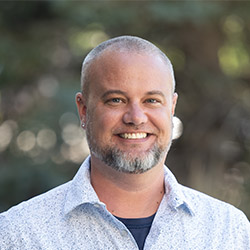
Brian Sinclair
ASCP School Liaison
Brian@ascpskincare.com
800-789-0411, ext. 1633
"My favorite thing about working with schools is being at the beginning of a student’s journey to becoming an esthetician and helping schools send amazing professionals into the world."
Areas Covered: Alabama, Arkansas, Florida, Georgia, Illinois, Indiana, Iowa, Kansas, Louisiana, Michigan, Minnesota, Mississippi, Missouri, Oklahoma, Puerto Rico, South Carolina, Tennessee, Texas, US Virgin Islands, Wisconsin